Continuing the Work with Flow
Sometimes projects are born not from a clear plan, but from pure impulse. The story of "The Abandoned Garden" began exactly like that. After receiving an invitation to participate in the "Vita Botanica" exhibition, which was dedicated to the garden as a place of harmony, I didn't build complex concepts. Instead, I just opened ComfyUI, my usual tool for working with neural networks, and decided to completely surrender to the process—to let the work come into being on its own. This isn't my usual practice; I typically try to think everything through in advance. But after the successful project "The Dawn of a New Era", I decided to try this new approach in my creative work. I wanted to free myself from all-encompassing deliberation and try to catch the flow, as I once did with music videos.
And this approach immediately bore fruit. The very first successful image the neural network generated was this exact flower. It was the same kind of moment as with "Dawn of a New Era," where a single image proves so powerful to me that it becomes the tuning fork for the entire future work.

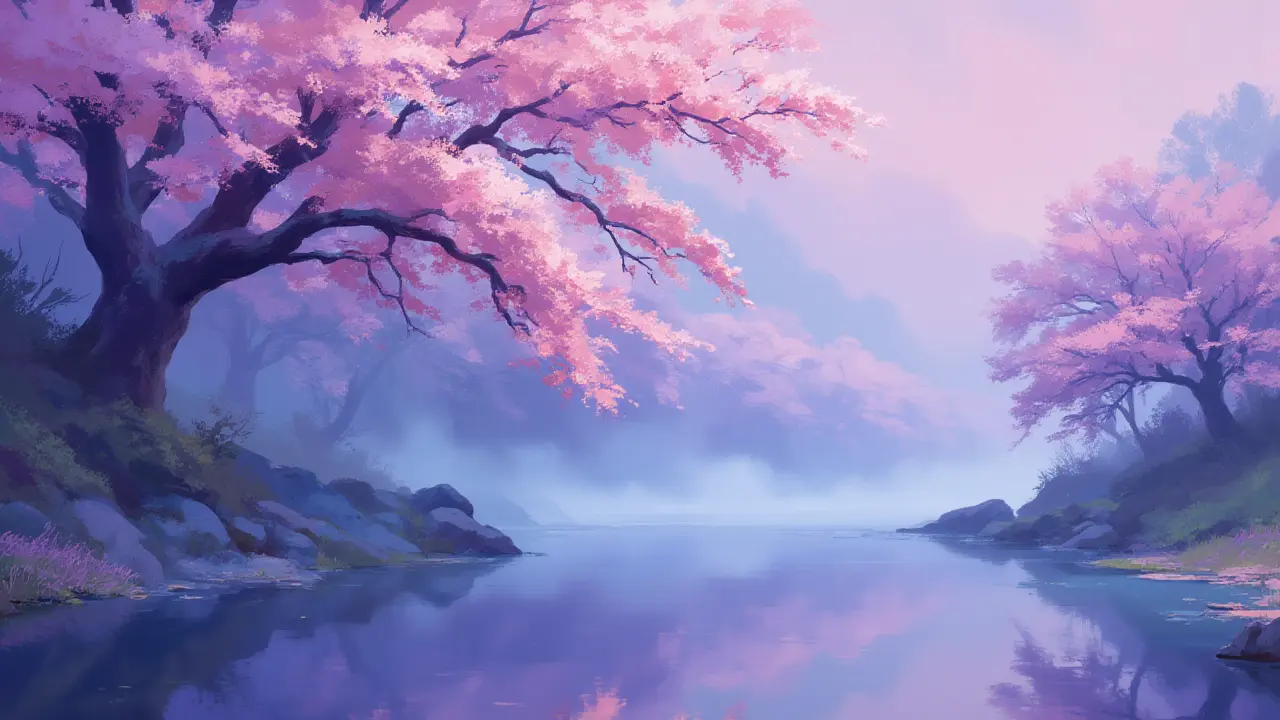
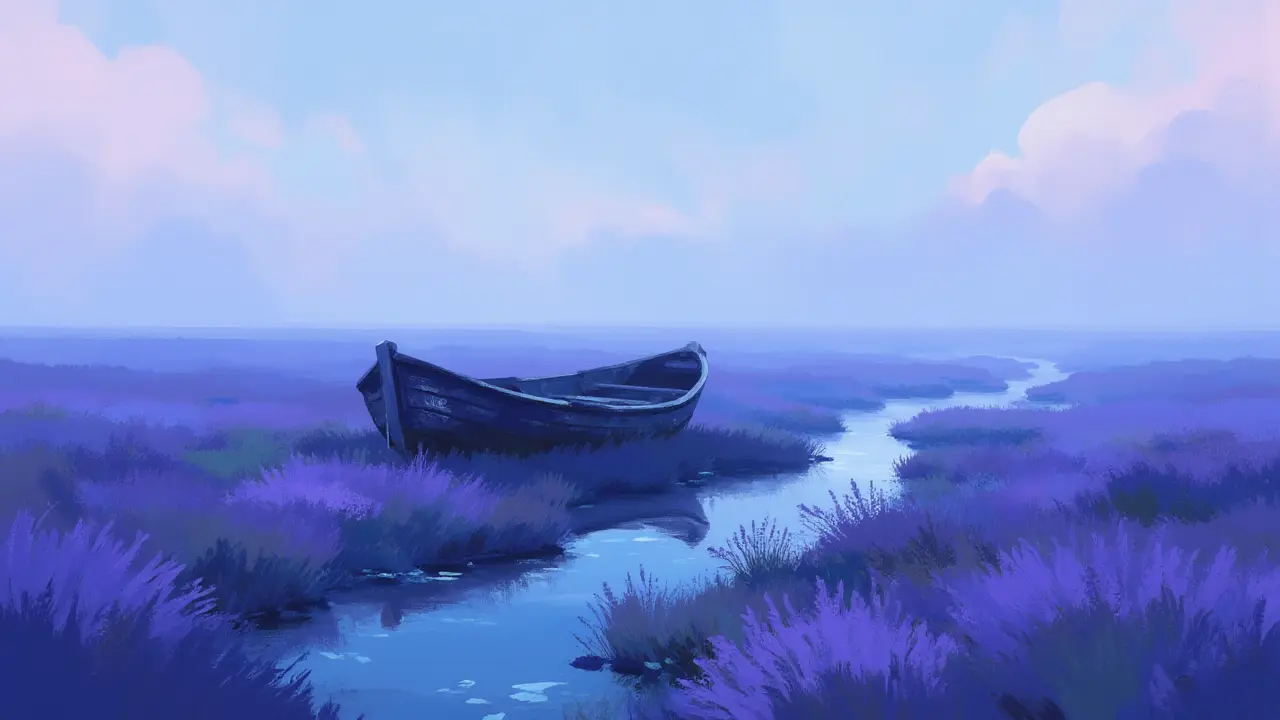
It brought together all my initial sketches: a gentle palette of pink, purple, and blue, and most importantly, that distinct feeling of "journeying through a dream." Using this flower as a starting point, I continued to generate the other scenes: blooming trees by still water, an abandoned boat, an old lantern. There were no people in these pictures, but their invisible presence, their past care, was clearly felt. This was "The Abandoned Garden"—a place where someone had poured their soul and then departed.


The Garden That Awaits Me
I didn't immediately understand why this theme resonated with me so strongly. The answer came after the exhibition opened, during a period of reflection. For the last two years, I had dedicated myself almost entirely to my master's studies and complex interactive installations. I had almost "abandoned" what my creative journey began with—creating music videos.
This "Abandoned Garden," beautiful, beloved, but forsaken, became an unconscious symbol for me of that part of my creative work that I genuinely missed. It wasn't a preconceived idea. Rather, it was a feeling of gentle sadness and nostalgia that found its outlet in these images. I just acted as I felt, and only later did I realize what a personal story I had told through this project.
The Art of Presence
To convey this feeling, which I hadn't yet fully grasped myself, to the viewer, I decided to use technology not for effect, but for meaning. The interactivity in "The Abandoned Garden" is almost invisible, and this is a conscious choice. The Kinect sensor, installed next to the installation, acts as a metaphor for our attention. When there is no viewer in the hall, the garden on the wall exists, but it is blurry, its details indistinct, and the music is barely audible. It seems to slumber in a fog of time. But as soon as a person approaches and simply stands in front of the projection, a small miracle occurs: the image comes into focus, the colors become saturated, and music fills the space. The garden "awakens."
This simple gesture contains the main idea. To see beauty—not only in this garden, but in life—one must stop and look closely. To focus not with one's sight, but with one's inner sense. This work doesn't demand action from the viewer; it only asks for their presence. “Look, I’m still here, waiting for you, but I continue to live.”
Dialogues in the Garden
Usually, in my works, I create complex interactive experiences. My colleagues even joke about me, saying with sarcasm, "Oh, sure, he didn't put much thought into it." This made the scene I witnessed at the opening all the more ironic. Two visitors were standing in front of the projection, arguing heatedly as they tried to decipher a non-existent mechanic: "Look, the Kinect is tracking movements, and the video is changing!"
They were searching for complex code where I had deliberately left only a simple idea. I admit, their enthusiastic search made me doubt myself for a moment: maybe I should have made something more sophisticated? But now I see that episode differently. It became a valuable observation for me: technical simplicity can give rise to the most complex and interesting discussions. And it reminded me that the main task is not to demonstrate skill, but to create a reason for conversation.
Why the Flower?
Reflecting on the project after its completion, I often returned to the question: why did that first generated flower captivate me so much? What was it about it that made it the foundation for the entire story of "The Abandoned Garden"?
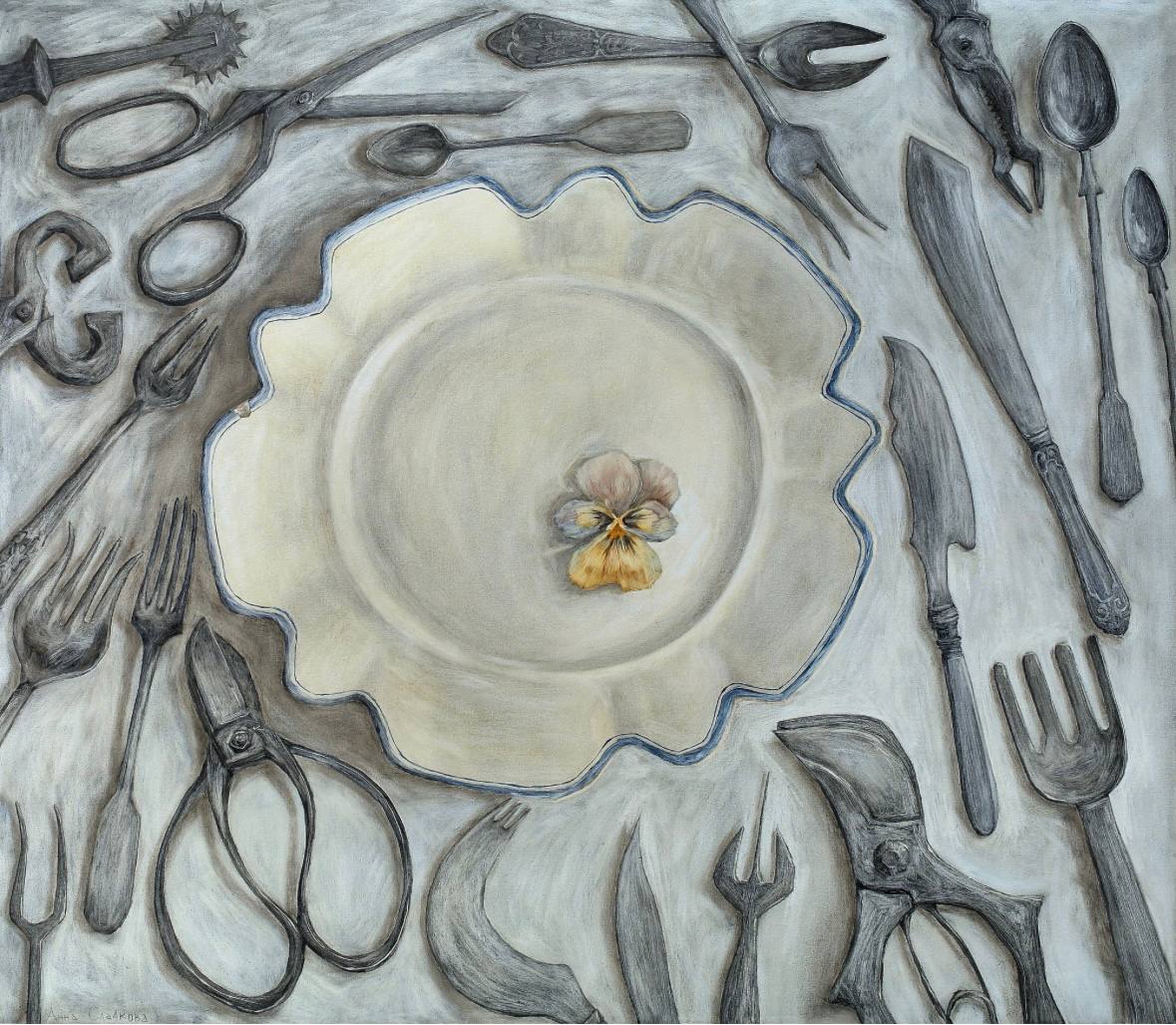
The answer, as is often the case, was found in the past. I realized that this image was subconsciously connected to a flower from a painting by my sister, Anna. Her work from the series "Dreams of Future Flowers," with its sense of fragile beauty, had made a huge impression on me and, apparently, planted this symbol deep inside me, waiting for the right moment to sprout.
Seeds of the Future
The desire to give the project's key image a physical life emerged almost immediately. At the same time I was printing the "Dawn of a New Era" piece on canvas, I intuitively decided to render this flower in a material form as well. At the time, I hadn't fully realized its deep connection to my sister's work, but I simply felt that this image deserved more than to remain on a screen. Thus, the matted print came to be—a continuation of my experiment in transferring the digital into the real world and a personal artifact that now reminds me how closely our personal stories and creativity can be intertwined.
"The Abandoned Garden" in its current form is, perhaps, only the beginning. I feel that something much larger can grow from these images and feelings. Perhaps it will be a series of graphic works or a more profound animated story. For me, this project has become not a period, but a comma. A seed that I have planted, and now I wait with great interest to see what flowers will grow in my no-longer-so-abandoned garden.